How Does Medicaid Treat the Purchase of a Life Estate?
We live in NJ. My dad broke his hip from a car accident, went through therapy, came home to his house, and fell down his step...
Read more Elder Law Answers
 Takeaways
A new trailer was recently released for As Deep as the Grave starring Val Kilmer.
Before 2026, that likely would not have raised eyebrows. A Hollywood icon returning to the screen is nothing new.
But Kilmer passed away last April.
Using generative artificial intelligence (AI), the film recreates his likeness and voice, placing him back on screen with the consent of his estate. The project reportedly uses “state-of-the-art” AI to show his character across multiple stages of life, with over an hour of screen time.
Kilmer’s family says he would have wanted to be part of the film. His AI-generated presence, however, is drawing attention — and controversy — about who gets to decide whether someone comes back, and in what form.
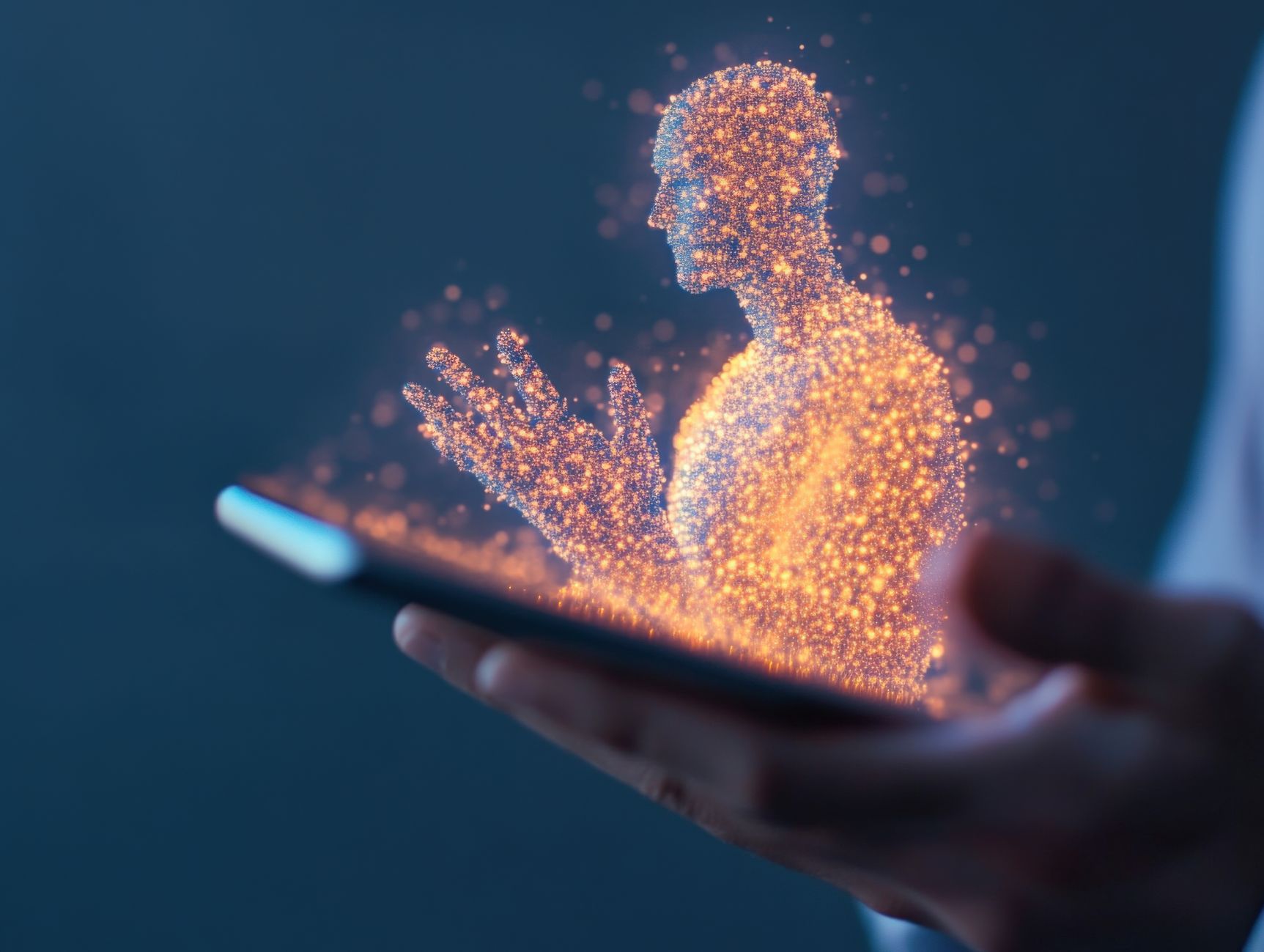
In the age of AI, the grave is no longer a barrier to returning. And that haunting fact means it is no longer enough to plan for your digital assets. You also need to plan for your “digital self” — and whether your private data can be used in a digital afterlife you never authorized.
At one point in the film, Kilmer’s AI-generated character kneels to look at a child and tells her, “Don’t fear the dead and don’t fear me.”
That may be easy for him to say. Kilmer didn’t actually “say” it. Or did he?
This is the kind of ethically murky, reality-bending question that is becoming harder to ignore as AI enables digital recreations of people who have died, often referred to as “ghostbots” or “griefbots.”
An article in Nature describes one such example: a woman who built an AI version of her father, which she named “Dadbot,” by combining ChatGPT with voice modeling software. During a two-hour “digital séance,” she found herself arguing with him. Saying goodbye, she later said, felt “surprisingly hard,” as if she had done something wrong.
As more platforms begin offering such services, people are experimenting with AI recreations of loved ones in ways that would have been unthinkable just a few years ago. Some see it as a tool for comfort in mourning. Others suggest it could complicate the grieving process.
But what would the Dad behind “Dadbot” think?
While comparable to the AI-generated Kilmer, the comparison isn’t perfect. Kilmer’s performance was scripted, authorized by his estate, and compensated. It adheres to developing legal frameworks governing AI and the use of a person’s likeness, grounded in consent and control.
Laws in states like California and New York recognize postmortem rights in a person’s name, image, and likeness (NIL rights) and allow estates to manage or license that use for a period after death. Newer laws in California also require explicit estate consent before an AI-generated replica of a deceased performer can be used commercially. The Screen Actors Guild and the American Federation of Television and Radio Artists has also issued its own AI guidelines.
Filmmakers involved in the Kilmer project have said the process followed applicable AI rules, and his family has indicated he would have wanted to complete the role he was cast in before his death. The project also builds on Kilmer’s own prior, authorized use of AI to reconstruct his voice for Top Gun: Maverick.
For most people, however, there is no script — and no established set of rules — surrounding our AI-created likenesses. Even estate planning attorneys acknowledge that the rules are struggling to keep up with the technology, and that the law surrounding AI resurrection remains unsettled at best.
Laws about “digital remains” sound like something out of science fiction. But in 2026, they’re a legal reality shaped by a complex patchwork of state and federal initiatives.
As Deep as the Grave represents something close to a best-case scenario: a controlled, authorized use of AI to recreate a person’s likeness. But few people benefit from the kinds of legal structures designed with public figures in mind. The rest of us are entering a legal “Wild West,” where your digital self might be more vulnerable than your bank account.
A member of the National Association of Estate Planners and Councils told Ars Technica that questions about AI “ghosts” are “essentially uncharted territory for estate planners since AI is relatively new to the scene.”
She also said celebrities may have more legal protection than everyday people, especially when it comes to preventing private, noncommercial AI copies.
With those caveats in mind, here is a representative snapshot of how the law is starting to respond — and where it still falls short — in early 2026 as AI technology continues to outpace existing privacy law.
At the federal level, lawmakers have begun to respond. Bipartisan proposals like the NO FAKES Act reflect a growing effort to create protections against unauthorized digital replicas of a person’s voice or likeness.
While the details are still evolving, these proposals generally move in the same direction:
The Gap: These efforts focus primarily on commercial use. They do not fully address private, noncommercial recreations like a family-built “DadBot.”
States have moved faster — and in some cases, more aggressively.
The Tennessee ELVIS Act, signed in 2024, expands protections for voice and likeness, reinforcing that unauthorized imitation, especially for commercial use or deception, can carry legal consequences. It reflects a notable shift toward treating a person’s voice as a protected element of identity, not just an attribute of celebrity.
States that include California and New York have also expanded postmortem publicity rights, allowing estates to:
Other states have taken more targeted approaches. In Illinois, for example, lawmakers have updated the state’s right of publicity law to address AI directly. It defines and restricts the unauthorized use of AI-generated versions of a person’s voice, image, or likeness — specifically where there is deception, distribution, or identifiable harm.
Effective June 2026, Washington state also will protect against “forged digital likenesses,” or AI-generated content intended to deceive or misrepresent, with civil penalties of up to $3,000 per violation.
Taken together, these laws show where the legal system is focusing its attention:
The Gap: These laws are strongest in cases of fraud or commercial gain. They are far less clear when it comes to private uses, such as a family member using emails, texts, or recordings to create a personal AI version of someone who has died.
This is where the law runs out of runway. Most current protections treat your likeness as property that can be controlled, licensed, or monetized. They do not fully address privacy or personal dignity after death.
Your estate may be able to control commercial uses of your likeness.
The Gap: The law may protect your image as an asset, but it does not yet fully protect your identity from being recreated.
There is also a less obvious issue. A landmark February 2026 federal ruling, United States v. Heppner, has redefined the stakes of “brainstorming” with AI. When people use AI tools to think through personal decisions, including estate planning, they may be creating records they don’t expect:
The Gap: What feels like a private conversation may not be legally treated that way.
The stark reality in 2026 is that you probably don’t have as much control over your “digital self” as you’d like. And until the law catches up, creating an estate plan that prevents your “AI resurrection” and unauthorized uses of your postdeath digital identity is even less certain — and more complicated.
If you find the idea of your AI ghost unsettling, or you simply want to exert greater control over digital replicas of yourself, here are issues to look out for and how you can address them in your 2026 estate plan:
These are just a few ideas worth considering as AI reshapes long-held assumptions about identity, property, autonomy, and even the notion of self. In this “brave new world,” estate planning remains one of the most effective ways to exert control over change and prepare for uncertainty.
You may not be able to “future proof” your plan completely, but an attorney can help you update your plan for 2026 so that it protects you in this life — and in the digital afterlife that may follow.