Search Articles

Find Attorneys

Is Using Artificial Intelligence to Plan Your Will Safe?

  • April 29th, 2026

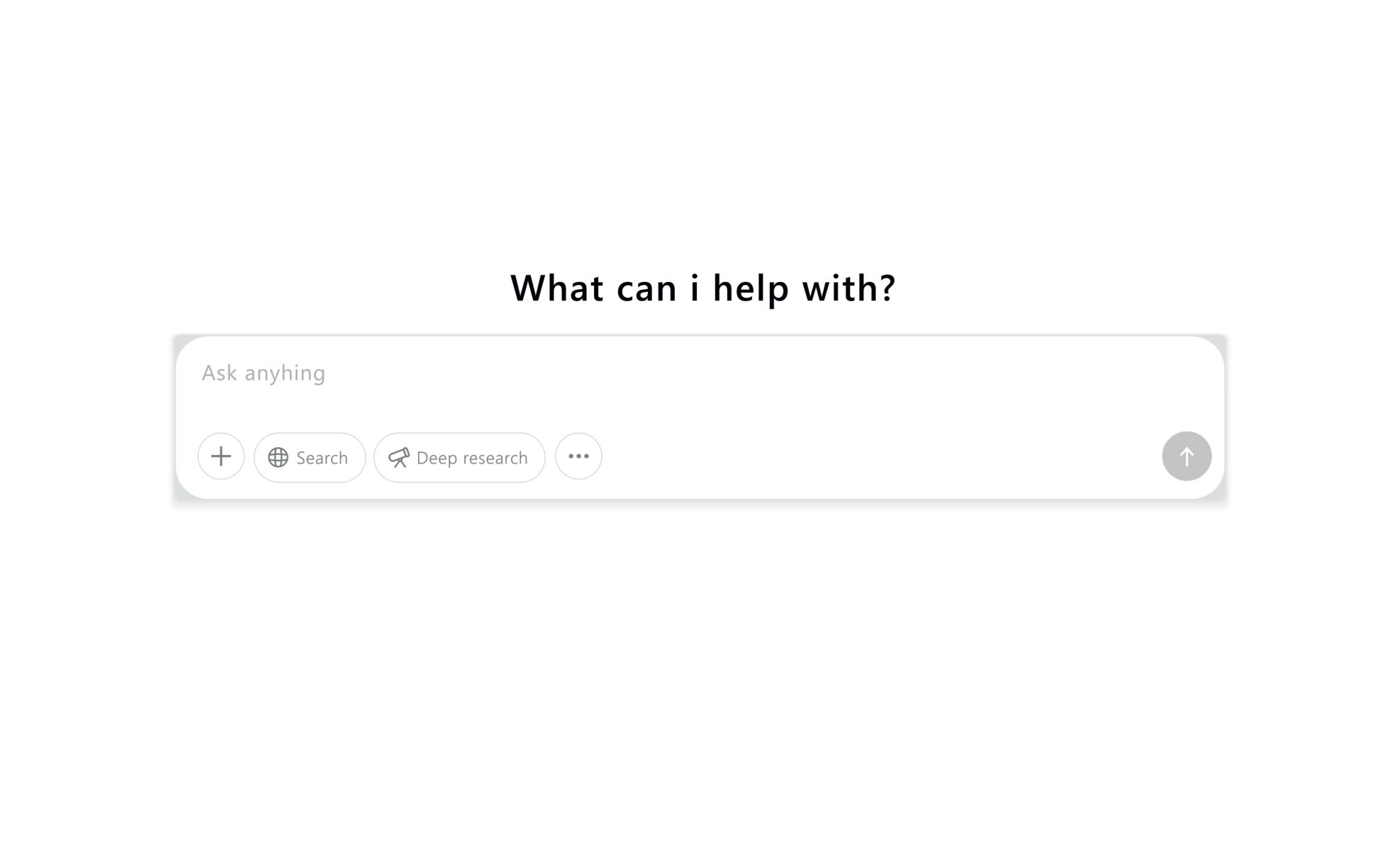
AI prompt field asking: What can I help with?Takeaways

  • AI chats can create a permanent record of your intentions that may not be protected like attorney-client conversations.
  • Even if you hire an attorney later, earlier AI drafts and chats may still be treated like ordinary records in a dispute.
  • AI can be useful for general education, but it’s risky to use it for personal details, family conflict, or final document drafting.
  • If you use AI at all, reduce risk by removing identifying details, limiting “memory” features, and having an attorney review anything you plan to sign.

It starts innocently enough: You’ve been meaning to update your will for months but haven’t had time to meet with your attorney.

You have heard how helpful artificial intelligence (AI) can be in performing tasks, so you ask an AI chatbot about making a basic will. Before you know it, you’re asking about family conflict and disinheriting someone. Eventually, you paste in something sensitive — a memo from your attorney — and ask the AI to explain it “in plain English.”

Local Elder Law Attorneys in Your City

Elder Law Attorney

Firm Name
City, State

Elder Law Attorney

Firm Name
City, State

Elder Law Attorney

Firm Name
City, State

That convenience comes with a hidden risk: You may be creating a detailed digital record about your private intentions. Unlike a conversation with your attorney, that record may not be confidential — and in the wrong situation, it could be requested and used later in a dispute.

Growing Trust in AI Can Conceal Hidden Consumer Privacy Risks

AI’s rapid rise has reshaped how we interact with information, decisions, and advice once handled by professionals. It has also introduced risks that many are only beginning to understand, personally, professionally, and legally.

AI can get things wrong. Yet despite concerns over “hallucinations,” AI adoption continues to surge, including for personal tasks like estate planning.

One study found that two-thirds of individuals surveyed use AI regularly. However, only 46 percent say they trust AI systems, exposing a tension between AI benefits and risks. This tension — growing reliance on AI alongside lingering skepticism about its reliability — has been described as the “AI Trust Paradox.”

About one in five Americans now use AI in their professional lives. Fifty-seven percent use it for personal purposes, including estate planning. Over the past year, 40 percent report an increase in their personal AI usage.

From 2025 to 2026, the percentage of Americans who say they trusted AI advice more than a human attorney for estate planning jumped from 20 percent to 30 percent. Over the same period, the share who said they trust AI less than a human attorney fell from 46 percent to 36 percent.

Most of those who say they are open to using AI for estate planning want attorney oversight to be part of the process. At first glance, that distinction feels meaningful. Use AI to prepare, then have a professional review. But as a court’s recent decision in the case U.S. v. Heppner shows, the line may not be so clean.

By the time AI has been used for brainstorming, drafting, or refining sensitive decisions — before an attorney is ever involved — a record may already exist outside the protections of the attorney-client relationship. In some situations, other people can ask for those AI chats and documents later and use them to argue about what you meant or why you made certain choices.

When AI Conversations Stop Being Private

The law often struggles to keep pace with technology. It can take years for courts to decide how old rules apply to newer tools. But once a court does weigh in, that decision can shape what happens to everyday records, including AI chats, when there’s a dispute.

In U.S. v. Heppner, Bradley Heppner used a generative AI platform to assist in his legal strategy amid a criminal investigation. He prepared detailed reports outlining his defense strategies, factual arguments, and legal theories — much like the sensitive “brainstorming” someone may engage in when planning their estate.

When federal agents seized Heppner’s electronic devices, they discovered dozens of documents detailing these AI exchanges. Heppner’s legal team fought to keep them private, arguing they were protected by attorney-client privilege.

The court disagreed. Its ruling established several critical principles that every “DIY estate planner” should note:

  • AI is not an attorney. An AI platform is a third-party commercial tool, not a legal professional. Since Heppner was not communicating with a licensed lawyer, the confidentiality required for attorney-client privilege was not present.
  • The privacy policy trap. The judge pointed to the AI provider’s own privacy policy, which stated that the company collects user “inputs” to train its models and reserves the right to disclose that data to third parties or government authorities. As a result, Heppner had no “reasonable expectation of confidentiality” when clicking “Accept.”
  • No retroactive protection. Heppner later shared his AI-generated materials with his attorneys. However, the court ruled that doing so did not retroactively make them privileged. If a document is created outside a protected relationship, involving an attorney afterward does not change its status.
  • The work product limitation. Because Heppner used the AI independently rather than at his attorney’s direction, the materials were treated like ordinary records (meaning the other side could request them and use them as evidence).

Although this case wasn’t about wills, the underlying principles are equally applicable to estate planning: If you share sensitive details with a third-party AI tool, you should assume those records may not stay private.

Estate Planning Implications

The Heppner ruling is a game-changer for estate planning in more ways than one.

If you use a public AI to brainstorm your will or summarize your attorney’s advice, you aren’t just talking to a helpful assistant. You are voluntarily disclosing your private intentions to a third-party platform that can collect, store, and potentially share your data.

In a potential future dispute over your estate, those “private” logs may not be protected by your attorney. Disgruntled heirs or creditors may request, review, and use them to challenge your plan.

Post-Heppner, treating AI for estate planning like a “DIY” experiment can turn private chats into a discoverable digital paper trail that could undermine your best-intentioned estate plans in the following ways:

The “Loss of Privacy” Trap

The Heppner ruling established that AI platforms are third-party commercial entities, legally distinct from legal counsel.

  • The action: Pasting an email from your estate planning lawyer into an AI tool to “translate it into plain English.”
  • Why it can backfire: Sharing an attorney’s advice with a third party can weaken the privacy protections that normally apply to attorney communications. In a lawsuit, someone may try to obtain the AI transcript and the original lawyer’s email.

The “Were They Thinking Clearly?” Paper Trail

Disgruntled heirs sometimes challenge a will by claiming the person wasn’t of sound mind.

  • The action: Repeatedly asking AI the same questions or typing messages that show confusion about your family members, accounts, or property within a prompt.
  • Why it can backfire: If someone later challenges your will, those messages could be used as evidence that you were confused or not fully able to make decisions at the time.

The “Who Was in the Room?” Digital Fingerprints

Heirs may claim a sibling “pressured” a parent to change their will.

  • The action: Using an AI tool to revise a will while at a specific family member’s house or on their device.
  • Why it can backfire: AI logs may include timestamps and, depending on the platform, location data. The information may fuel claims that someone pressured them to change their plan.

The “Profile” Problem

Modern AI does more than store what you say. It builds a profile of who you are.

  • The action: Engaging with AI in a way that suggests emotional vulnerability, depression, or high suggestibility.
  • Why it can backfire: Some services use your inputs to personalize responses. That can create additional records about your behavior and preferences that you never meant to become part of a legal dispute.

The “State Law Hallucination” Trap

  • The action: Asking an AI to “write a valid will for Florida” (or any state), printing it, and then signing it.
  • Why it can backfire: Will rules can be strict and state-specific. If the document misses a required step or uses the wrong wording, it could be challenged, and your family could pay the price in delays and legal fees.

The “Hiding Assets” Trap

Courts have little patience for “bad faith” attempts to shield assets from legal obligations, and AI prompts can turn suspicion into documented evidence of intent.

  • The action: Asking an AI how to move money so an ex-spouse, creditor, or government program “can't find it.”
  • Why it can backfire: These prompts could be used as evidence of intent to dodge a legal obligation. If your asset transfers are later challenged, your own words may be used to argue you acted improperly. Deleting a chat doesn’t always mean it’s gone.

How to Reduce the Risk of AI Chats Being Used in a Dispute

Hopefully by now, it’s clear that “casual” AI prompts could be a serious liability to your estate plan.

If you use AI as an educational tool, treat it like a public place. Assume what you type could be saved, reviewed, or shared later.

Do’s

  • Anonymize everything. Never use real names, specific addresses, or exact dollar amounts. Use placeholders like “Child A” or “Property B.”
  • Disable “memory” and “personalization” features (if available). In your AI settings, toggle off features that “remember” you. This prevents the AI from building a long-term “User Profile” that could be subpoenaed.
  • Opt out of data training (if offered). Ensure your chats aren’t being used to “improve the model.” Otherwise, you have no “reasonable expectation of privacy” under Heppner.
  • Verify with an attorney. Always assume AI is “hallucinating” state laws. Bring the AI’s general concepts to your attorney to see if they are valid in your specific state.

Don’ts

  • Don’t paste messages from your attorney into an AI tool. Never upload PDFs or paste text from your law firm into an AI. This act may waive attorney-client privilege for those communications.
  • Don’t use AI as a diary. Avoid prompts that express emotional distress, frustration with heirs, or confusion. These can create a digital “paper trail” of emotional statements that could be taken out of context.
  • Do not sign AI-generated documents as your final will. Do not sign a document generated solely by AI. Missing legal terminology required by state law can be grounds for contesting the document.
  • Don’t ask for ways to hide money or dodge obligations. Such prompts can create a written record that could hurt you later.
  • Do not assume deletion is permanent. Companies may keep backups of “deleted” chats for a certain period, and courts can require records to be preserved.

The Final Word on AI and Estate Planning: Trust (But Verify)

In the wake of Heppner, here is a good rule of thumb: never enter into AI what you wouldn’t want a judge to read.

AI can be useful for figuring out the what, such as learning the basics and organizing your questions. But use a professional for the why and how. Bring those questions to an attorney who is legally bound to keep them — and your family’s future — private.


Created date: 04/29/2026
Medicaid 101
What Medicaid Covers

In addition to nursing home care, Medicaid may cover home care and some care in an assisted living facility. Coverage in your state may depend on waivers of federal rules.

READ MORE
How to Qualify for Medicaid

To be eligible for Medicaid long-term care, recipients must have limited incomes and no more than $2,000 (in most states). Special rules apply for the home and other assets.

READ MORE
Medicaid’s Protections for Spouses

Spouses of Medicaid nursing home residents have special protections to keep them from becoming impoverished.

READ MORE
What Medicaid Covers

In addition to nursing home care, Medicaid may cover home care and some care in an assisted living facility. Coverage in your state may depend on waivers of federal rules.

READ MORE
How to Qualify for Medicaid

To be eligible for Medicaid long-term care, recipients must have limited incomes and no more than $2,000 (in most states). Special rules apply for the home and other assets.

READ MORE
Medicaid’s Protections for Spouses

Spouses of Medicaid nursing home residents have special protections to keep them from becoming impoverished.

READ MORE
Medicaid Planning Strategies

Careful planning for potentially devastating long-term care costs can help protect your estate, whether for your spouse or for your children.

READ MORE
Estate Recovery: Can Medicaid Take My House After I’m Gone?

If steps aren't taken to protect the Medicaid recipient's house from the state’s attempts to recover benefits paid, the house may need to be sold.

READ MORE
Help Qualifying and Paying for Medicaid, Or Avoiding Nursing Home Care

There are ways to handle excess income or assets and still qualify for Medicaid long-term care, and programs that deliver care at home rather than in a nursing home.

READ MORE
Are Adult Children Responsible for Their Parents’ Care?

Most states have laws on the books making adult children responsible if their parents can't afford to take care of themselves.

READ MORE
Applying for Medicaid

Applying for Medicaid is a highly technical and complex process, and bad advice can actually make it more difficult to qualify for benefits.

READ MORE
Alternatives to Medicaid

Medicare's coverage of nursing home care is quite limited. For those who can afford it and who can qualify for coverage, long-term care insurance is the best alternative to Medicaid.

READ MORE
ElderLaw 101
Estate Planning

Distinguish the key concepts in estate planning, including the will, the trust, probate, the power of attorney, and how to avoid estate taxes.

READ MORE
Grandchildren

Learn about grandparents’ visitation rights and how to avoid tax and public benefit issues when making gifts to grandchildren.

READ MORE
Guardianship/Conservatorship

Understand when and how a court appoints a guardian or conservator for an adult who becomes incapacitated, and how to avoid guardianship.

READ MORE
Health Care Decisions

We need to plan for the possibility that we will become unable to make our own medical decisions. This may take the form of a health care proxy, a medical directive, a living will, or a combination of these.

READ MORE
Estate Planning

Distinguish the key concepts in estate planning, including the will, the trust, probate, the power of attorney, and how to avoid estate taxes.

READ MORE
Grandchildren

Learn about grandparents’ visitation rights and how to avoid tax and public benefit issues when making gifts to grandchildren.

READ MORE
Guardianship/Conservatorship

Understand when and how a court appoints a guardian or conservator for an adult who becomes incapacitated, and how to avoid guardianship.

READ MORE
Health Care Decisions

We need to plan for the possibility that we will become unable to make our own medical decisions. This may take the form of a health care proxy, a medical directive, a living will, or a combination of these.

READ MORE
Long-Term Care Insurance

Understand the ins and outs of insurance to cover the high cost of nursing home care, including when to buy it, how much to buy, and which spouse should get the coverage.

READ MORE
Medicare

Learn who qualifies for Medicare, what the program covers, all about Medicare Advantage, and how to supplement Medicare’s coverage.

READ MORE
Retirement Planning

We explain the five phases of retirement planning, the difference between a 401(k) and an IRA, types of investments, asset diversification, the required minimum distribution rules, and more.

READ MORE
Senior Living

Find out how to choose a nursing home or assisted living facility, when to fight a discharge, the rights of nursing home residents, all about reverse mortgages, and more.

READ MORE
Social Security

Get a solid grounding in Social Security, including who is eligible, how to apply, spousal benefits, the taxation of benefits, how work affects payments, and SSDI and SSI.

READ MORE
Special Needs Planning

Learn how a special needs trust can preserve assets for a person with disabilities without jeopardizing Medicaid and SSI, and how to plan for when caregivers are gone.

READ MORE
Veterans Benefits

Explore benefits for older veterans, including the VA’s disability pension benefit, aid and attendance, and long-term care coverage for veterans and surviving spouses.

READ MORE