Aretha Franklin's Lack of a Will Could Cause Huge Problems
According to court documents, legendary singer Aretha Franklin did not have a will when she died, opening up her estate to pu...
Read more Elder Law Answers
 Takeaways
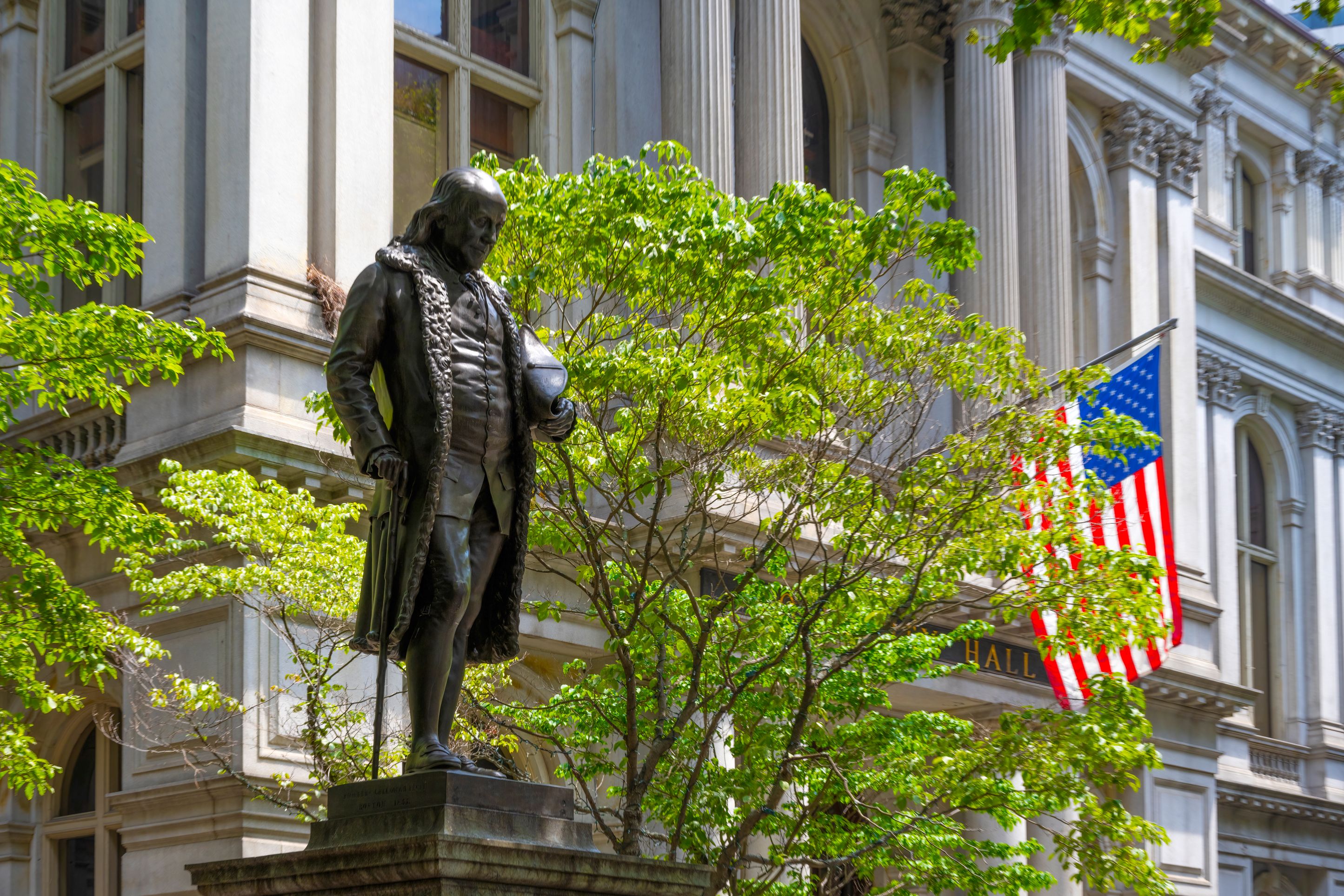
Benjamin Franklin was many things: a Founding Father, writer, scientist, inventor, diplomat, printer, publisher, businessman, and political theorist.
Yet one of his more impressive legacies — Franklin the philanthropist — is often overlooked.
The man who gave us bifocals, the lightning rod, and America’s first fire company, insurance company, and public lending library made a quiet but ambitious bet on the country’s future. In his will, Franklin left £1,000 (about $2,000 at the time) to each of two cities he loved: Boston and Philadelphia.
But there was a catch: The cities could not fully access the money for 200 years. And for the first 100 years, the money could be used only to make low-interest loans to young tradesmen starting out in business. Borrowers would repay those loans with interest, and the repayments had to be reinvested, not spent.
By 1990, 200 years after Franklin’s death, the original $4,000 had grown to over $6.5 million. The money ultimately supported scholarships, trade schools, community projects, and civic improvements.
Franklin’s bequest, however, is about more than the power of compound interest. It is a masterclass in long-term planning and controlled investment that has parallels to how an estate plan can leave large gifts that can have an impact for generations — without leaving them to chance.
Franklin didn’t just leave behind inventions, aphorisms, and a founding role in American history. He also left behind one of the most audacious estate planning experiments ever attempted — a plan designed to outlive everyone involved by centuries.
In his will, Franklin directed that the funds be held in trust and invested according to specific instructions.
When that milestone arrived in 1990, the results reflected the discipline Franklin had built into the plan. What began as a combined $4,000 had grown to over $6.5 million.
Boston’s share was substantially more significant than Philadelphia’s — largely because of how each city managed their gifts — but Franklin’s broader objective was achieved. His gift continued working long after he was gone.
Although Franklin imposed clear rules on how his bequests were to be used, he left day-to-day administration to the cities themselves. Each appointed local trustees to oversee lending, repayment, and reinvestment. Over time, their approaches diverged, as did their results.
Neither city managed the funds flawlessly. Historical accounts describe periods marked by inefficiency, loan defaults, incomplete records, and “plain old graft.” Structure alone did not eliminate human error.
By 1990, Boston’s fund had grown to nearly $5 million, which the city used to support scholarships, vocational education, and civic initiatives, including the Benjamin Franklin Institute of Technology in 1908. The school still stands on Berkeley Street and continues to serve many students from low-income families.
Meanwhile, Philadelphia’s fund grew to approximately $2 million, substantially less than Boston’s despite identical starting amounts. Like Boston, Philadelphia used part of the funds toward education, helping to establish the Franklin Institute, a hands-on science center that opened in 1934, as well as other community foundations and projects.
For estate planning purposes, that contrast is instructive. Even a carefully structured gift depends on the quality of its stewardship. Clear terms matter, but so does choosing the right trustees and building accountability into the plan.
Franklin’s gifts were more than a well-timed windfall for two cities he cared deeply about. They were a deliberate effort to ensure that his values would live on. Consider a few of his famous quotes:
His bold 200-year initiative was definitely “worth the writing.”
Thousands of young people have received financial assistance, public works have been built, and educational institutions have taken root. Over generations, the funds have also supported literacy programs, housing initiatives, vocational training, and other community-based efforts.
What made Franklin’s bequests remarkable were not simply their longevity and growth, but what they revealed about his worldview. Franklin believed deeply in education, self-sufficiency, and opportunity earned through effort. Having risen from a teenage apprentice to one of the most influential figures of his era, he saw access to modest capital — not inheritance or charity — as a way to empower future generations.
An outright gift could have easily been spent and forgotten. Instead, Franklin designed a system that mirrored his values: patience, discipline, reinvestment, and long-term thinking. His legacy was not just a transfer of money; it was a transfer of values.
Modern estate plans can serve a similar function. When intentionally and intelligently structured for the long term, they don’t just pass assets from one generation to the next. They translate personal values into durable instructions that shape how wealth is used, protected, and stewarded long after the original decision-maker is gone.
Many of Franklin’s inventions remain in use today, from the Franklin stove to the odometer and flexible catheter. He did not patent his inventions, believing they should be shared freely for the benefit of humanity.
By combining the power of compound interest with a strong structure, you can use that same inventive planning approach in your own estate plan to benefit your heirs — and, indirectly, the broader community if those heirs are guided to put their inheritance to good use.
Here are several planning principles inspired by Franklin’s experiment.
Franklin didn’t focus on who would receive money, but on what the money should accomplish. Modern estate plans work best when they move beyond simply naming beneficiaries and instead define guiding purposes, such as education, financial stability, or opportunity.
How to Apply This: Consider trusts or other structures that include standards for how assets may be used. An outright gift, coupled with hope that it is used as intended, is not a strategy.
Franklin built delay directly into his plan, knowing that immediate access can undermine future goals. Time allowed the funds to grow and mature before the cities could put the money to work for the community.
How to Apply This: Spread out access to your inheritance or tie it to age or life milestones. This gives your loved ones time to learn, grow, and make responsible choices with the money.
Franklin allowed discretion, just not all at once. As restrictions loosened over time, administration mattered more. The lesson isn’t to eliminate flexibility, but to manage it carefully.
How to Apply This: Give trustees flexibility within clearly defined boundaries. Establish clear standards, limits on withdrawals, and defined purposes that preserve intent while allowing adaptation.
The differing outcomes between Boston and Philadelphia underscores that even a well-written plan depends on the people carrying it out.
How to Apply This: Trustee selection matters. Consider experience, independence, accountability, and long-term stability. In many cases, who you choose to manage the plan can matter just as much as what the plan says.
Franklin knew that future administrators would be imperfect. His system was resilient enough to survive human error and changing circumstances.
How to Apply This: Build in regular check-ins, transparency, and clear processes for replacing the person in charge if necessary. A thoughtful plan should assume things won’t always go perfectly and builds in safeguards accordingly.
Franklin’s beliefs, including education, self-reliance, and opportunity, were embedded in the structure of his gift, not merely described in words alone.
How to Apply This: Estate plans are one of the few legal tools that allow you to translate personal values into durable instructions. Thoughtful planning ensures that those values continue to guide decisions long after you are gone.
Franklin’s approach was deliberate. He recognized that no single generation — including his own — should control the ultimate outcome. By forcing the funds to remain productive over time, he created a legacy that matured slowly, outlasting both its creator and its early stewards.
Franklin’s 200-year gift worked not because it was generous, but because it was thoughtfully designed. His approach was neither rigid nor reckless. It balanced flexibility with structure. As the years passed and restrictions eased, his original intent continued to guide how the money was used.
That may be his most enduring lesson. Legacy is not created by money alone, but by design. As the designer of your own estate plan, you have the same opportunity. You can move beyond simply deciding who receives what and instead shape how your wealth will function over time — what it will support, what it will protect, and what values it will reinforce.
A well-crafted plan does more than transfer assets; it carries forward intention, provides guidance, and helps ensure that what you have built continues to work long after you are gone.