The Complex Modern Family Requires a New Planning Model, Book Argues
A 2017?book suggests that planning for elder care and a loved one's death are especially important for today's complex modern...
Read more Elder Law Answers
 Takeaways
Americans want to live longer, healthier lives, but here’s the problem: while we’re living more years overall, many of those extra years are spent dealing with long-term illness and physical decline.
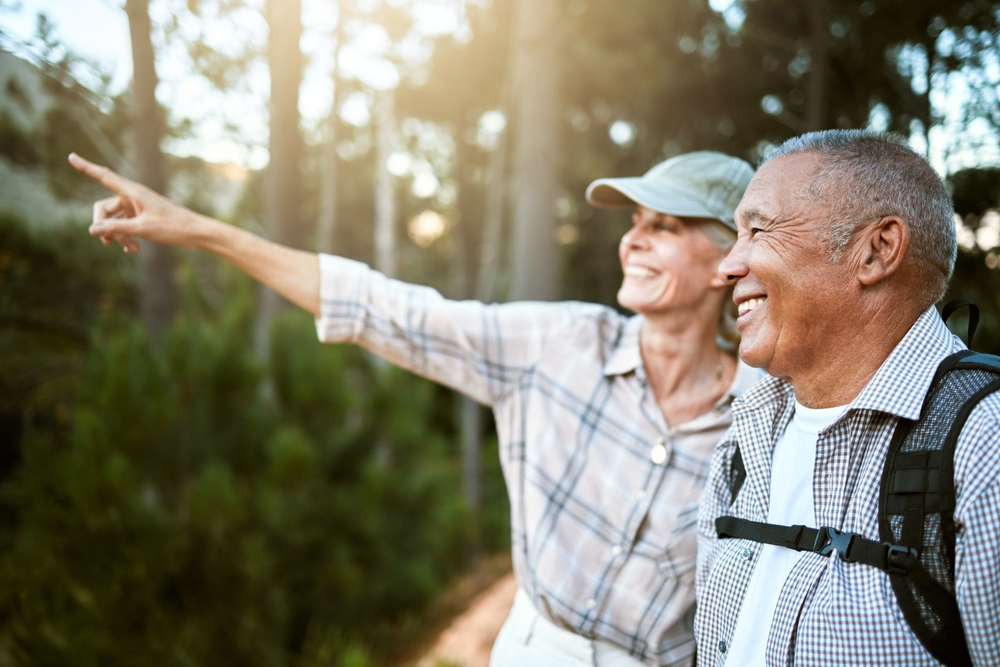
One scientifically backed way to improve overall health and extend health span is spending time outdoors — and more American seniors are doing just that.
According to recent research from the outdoor recreation industry, participation in outdoor activities among adults over age 65 has more than doubled in the past decade. Many older Americans now hike, ski, bike, paddle, rock climb, and travel more frequently than people decades younger.
Outdoor recreation offers seniors many benefits, including better physical health, mental resilience, and social connection, countering potential isolation or reduced mobility. But more active lifestyles can also increase risks. Older adults face slower recovery time and higher stakes from injuries, and their chosen activities may take them farther from home.
Today’s seniors aren’t slowing down. Yet many estate plans are still built around outdated assumptions about sedentary aging.
A traditional estate plan that doesn’t account for active travel, higher injury exposure, and the possibility of temporary incapacity — not just permanent decline — can struggle to keep up, leaving dangerous planning gaps at precisely the time many seniors are, as the kids say, “healthmaxxing.”
The old stereotype of a grandparent is someone who spends their day in an armchair, reading, watching TV, taking frequent naps, and only getting up for meals and bathroom breaks.
This imagined grandparent might only be 65 or 70 years old, but just a few decades ago, that age was considered old — certainly too old to join grandchildren on a hike or even a walk around the block.
Nowadays, though, Grandma and Grandpa are giving new meaning to “nature calls.”
Findings from the Outdoor Industry Association (OIA)’s 2025 Outdoor Participation Trends Report indicate that seniors’ participation in outdoor activities is soaring. In some families, they may be the ones suggesting the kids get off the couch and get outdoors.
The report notes that, in 2024, 23.1 million Americans born before 1959 participated in outdoor activities — 1.6 million more than in 2023 and 11.3 million more than in 2015.
Just six years ago, the 65+ age group was the smallest age cohort in outdoor recreation participation. But their share grew 7.4 percent last year — more than any other age group — and has more than doubled over the past decade. In 2024, the 65+ cohort was larger than participation groups for ages 55 to 64, 45 to 54, 18 to 24, and 6 to 12.
Other findings from the report include:
The “mature outdoor participant,” as the report calls these older outdoor recreators, tends to “share their outdoor pursuits with grandchildren…making outings memorable and ensuring future generations have the skills and knowledge to enjoy the outdoors.”
Older Americans aren’t the only ones getting in on the outdoor action. Outdoor participation overall has risen steadily over the past decade and reached a record high in 2024.
Young adults ages 18 to 24 are also getting outside in higher numbers as they battle digital burnout and embrace “healthmaxxing,” a social-media–driven health and wellness trend.
But Gen Z continues to struggle with affordability, and outdoor recreation participation remains more common at higher income levels due to greater disposable income and leisure time — resources older Americans are more likely to have than younger adults.
Baby boomers, in particular, are among the last generations to benefit from defined benefit pensions that guarantee lifetime income and often allow more time for leisure, sports, and fitness.
Many simply have more time and financial flexibility to devote to outdoor pursuits as part of a broader effort not just to live longer, but to spend more years in good health doing the things they enjoy.
“70 is the new 60” is more than aspirational — and not just anecdotal. It’s increasingly backed by science.
A 2024 study from Columbia University suggests that today’s seniors are staying more youthful than previous generations. Many 70-year-olds are functioning at physical and cognitive levels comparable to 60-year-olds from earlier decades.
The findings suggest that health span — the portion of life spent in good health — is expanding alongside lifespan.
The vast majority of older adults reported making changes in the past year to boost overall wellness. For example, 34 percent focused on physical activity and 22 percent spent more time in nature.
Studies consistently show that seniors who spend more time outdoors experience better mental and physical health. Activities in nature have been shown to:
Natural environments can physically alter neurochemistry. Simply living near nature and having access to what researchers call “blue and green” spaces is linked to better mental and physical health in older adults. This connection may even lower health care costs: one study found a positive correlation between participation in outdoor activities and lower medical spending.
At some level, aging becomes a self-fulfilling prophecy. Older adults’ perceptions of aging, and of themselves as they age, can have measurable effects on health, behavior, and even their longevity.
Viewing aging primarily as a period of physical and mental decline can reinforce the stereotype of the sedentary grandparent in the armchair. By contrast, seeing older adulthood as a time of learning and development may lead to more positive self-perceptions and greater engagement in preventive health behaviors.
More Americans are staying more physically active into their 60s, 70s, 80s, and even into their 90s. This is especially important because research shows that many older adults in the United States still don’t get enough exercise. And physical inactivity increases chronic disease risk and health care costs.
But outdoor adventures introduce seniors to different kinds of risks and exposures at a time when the body’s margin for error is narrowing.
While many seniors gravitate toward low-impact outdoor pastimes like birding, fishing, and gardening, others are actively pushing their limits.
In the past decade, for example, the number of athletes aged 60 and older registering for Ironman triathlons has quintupled — from roughly 2,500 participants to nearly 13,000. More seniors are also challenging stereotypes by engaging in higher-intensity sports like skiing, surfing, and mountain biking.
A study of older surfers found that participants defined aging as a “state of mind” and combat it by being physically active.
But the risks are not merely psychological. Sports-related injuries among older adults have increased significantly — from 55,684 in 2012 to 93,221 in 2021 — according to a 2024 study, which projects a further 123 percent increase in sports-related orthopedic injuries among adults 65 and older between 2021 and 2040.
“This shows that older people are getting injured more frequently during sports, they are participating in more sports and/or they are participating in different sports in which they are more likely to get injured,” the study concludes.
Importantly, it’s not just extreme outdoor sports that pose injury risks. Sprains and fractures can occur during mundane hikes or garden work. Birding can lead to trips and falls, fish hooks can lacerate and become infected, and wildlife encounters can turn dangerous.
And because older adults heal more slowly and less completely, what might once have been a routine injury can become a more serious — and far more expensive — health event.
For many of today’s older adults, an outdoor, experience-driven lifestyle is central to living longer and healthier. But as activity levels increase, so does exposure to a different category of risk.
These risks are often underappreciated, not because they are extreme, but because they sit in the gray space between full independence and permanent incapacity.
A fall while hiking, skiing, or biking that might have been a nuisance at age 40 can mean surgery, prolonged rehabilitation, or lasting mobility changes at 70.
Many injuries don’t end independence outright, but they interrupt it. Weeks or months of limited capacity can still create legal, financial, and logistical chaos when no one is authorized to step in.
Geography adds another layer. Injuries can happen away from home — on trips, at resorts, or in remote areas — where access to trusted friends or family members, physicians, and critical documents may be limited. Even brief hospitalizations, anesthesia, or head injuries can trigger temporary cognitive impairment, complicating decision-making at an inopportune time.
Most estate plans are designed around two endpoints: death or permanent incapacity. But active seniors are far more likely to experience something in between.
Families that don’t plan for these scenarios may be forced to improvise. Bills go unpaid, medical decisions stall, travel plans unravel, and, in some cases, courts are asked to intervene.
The result isn’t just inconvenience. It’s a loss of independence that can linger long after the injury heals. And loss of independence is exactly what this active older cohort strives to avoid.
This shift toward more active aging calls for a parallel shift in planning that’s grounded in realism, not fear, and incorporates the following considerations and documents:
Durable Powers of Attorney That Actually Work in Emergencies
Generic documents can fail when they’re needed most. Powers of attorney should be designed for real-world use, including emergencies that occur out of state or mid-travel, with clear authority that financial institutions will honor without delay.
Health Care Directives That Anticipate Temporary Incapacity
Planning shouldn’t assume incapacity is permanent. Your health care proxy should have immediate authority and access to your medical records and emergency contacts to manage short-term, unexpected health problems, not just end-of-life scenarios.
Planning for Interruption in Addition to Incapacity
Who pays bills? Who handles insurance, travel changes, or home logistics while someone recovers? These details matter during temporary setbacks and are typically overlooked because they don’t fit neatly into traditional planning categories.
Revisiting Plans as Lifestyles Evolve
The more someone travels, skis, or hikes, the more their planning should reflect that reality. Estate plans need to evolve alongside activity levels and life circumstances at all ages.
Outdoor athletes talk about being “dialed in.” In practice, this means being fully prepared, supported by proper gear and nutrition, and able to perform at their highest capacity.
If you’re going to live boldly later in life, your planning needs to be just as dialed in.
Estate planning can carry built-in, age-related assumptions that don’t accurately reflect nontraditional lifestyles and pastimes. It doesn’t have to signal decline. Done purposefully, planning can help to preserve independence, protect autonomy, and ensure that an active lifestyle can continue — even when the unexpected interrupts the adventure.