Search Articles

Find Attorneys

The Role of AI in Fall Prevention Among Older Adults

  • December 2nd, 2025

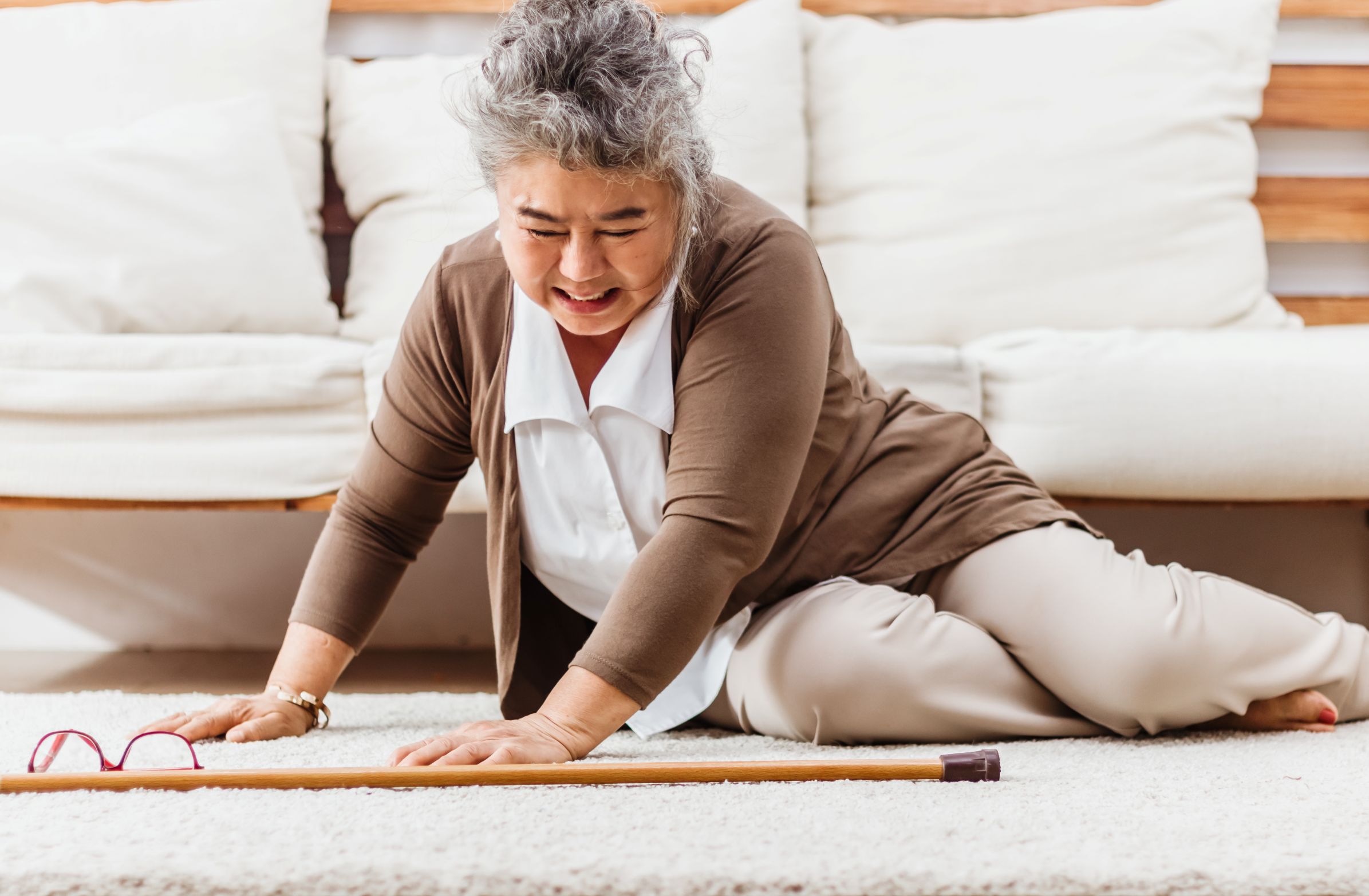
Senior woman who has fallen on the floor of her home, with her eyeglasses and cane on the ground next to her.Takeaways

  • Falls are a major health risk for older adults in the United States, with serious potential consequences.
  • Emerging AI technology in high-end senior living facilities uses sensors and predictive analytics to monitor movement, detect changes in patterns, and help prevent falls.
  • The technology shows promising results, with one facility reporting a 40 percent reduction in falls after implementation.
  • Key privacy concerns include the sensitivity of the movement data collected, data access, and the process of obtaining resident consent for monitoring.
  • Affordable and low-tech alternatives for fall prevention include fall-proofing the home, using wearable alert devices, maintaining physical fitness, choosing sensible footwear, and seeking regular check-ins from others.

Falls are the leading cause of injury and injury-related deaths for U.S. adults 65 and older, with one in four falling each year, per the Centers for Disease Control and Prevention (CDC). Falling can have devastating consequences for older adults, leading to broken bones, hospital stays, and worse.

Emerging technologies can now monitor older adults to reduce and respond to falls, but this enhanced monitoring comes with privacy concerns. According to the New York Times, high-end senior living facilities have begun implementing technology that uses Artificial Intelligence (AI) to target fall prevention.

Local Elder Law Attorneys in Your City

Elder Law Attorney

Firm Name
City, State

Elder Law Attorney

Firm Name
City, State

Elder Law Attorney

Firm Name
City, State

This technology is currently mainly being used in senior facilities with higher monthly fees. One facility that uses the tech, the Bristal in New York City, charges a staggering $14,500 for a basic studio apartment. However, this technology could become more commonplace in the future.

How the Technology Works

Sensors in residents’ units monitor their movements to detect patterns. Using this information, AI can predict when a resident may be at risk of falling.

The technology, known as predictive analytics, can also alert staff to check on a resident whose patterns have changed, suggesting a possible fall. Sometimes, residents who suffer what seems like a minor fall would not otherwise report it. However, they still may benefit from a checkup following such an incident.

Does AI Fall Prevention Work?

The technology appears promising. For instance, the Bristal saw a 40 percent drop in resident falls after putting the tech in place.

Privacy Considerations

Individuals considering fall prevention monitoring may be faced with a choice between privacy and security.

The systems do offer some privacy. Staff do not see a clear video of a resident. Instead, the technology shows silhouettes of people that obscure details. Newer technology shows abstract shapes instead of people.

Sensors monitor where the resident is in the unit and their movement patterns, which can be sensitive information. Questions also persist about what happens to the data the monitors collect and who has access to it.

Another issue is consent. Residents need to consent to monitoring. Concerns can arise when apparently well-meaning family members pressure residents to agree to monitoring or when the resident does not have the mental capacity to agree to it.

Fall Prevention Alternatives

Those who cannot afford the cost of high-end senior living or have privacy concerns may consider other steps to prevent falls. Even if you have access to fall prevention tech, these basic strategies offer an additional layer of prevention.

  • Fall-proofing your residence is a good first step. Remove thick rugs or other tripping hazards and install safety bars in showers or near stairs. Clean up clutter and keep floors clear.
  • Consider how you would call for help if you were to fall. Wearable devices are an option, as well as keeping a cell phone with you. Many senior facilities have help buttons in restrooms.
  • Staying physically active to maintain core strength and fitness is another preventative step. Some insurance plans may cover sessions with a physical therapist or trainer. But be sure to speak with your doctor before starting a new exercise plan.
  • Choosing sensible footwear can also prevent falls, as certain types of shoes and socks can be slippery. Comfortable house sneakers can provide grip.
  • Avoid going out in conditions where you are more likely to fall: Ice, wet leaves, and rain can all present hazards. Running errands when it is light out also offers more visibility.
  • If you live alone, ask someone you trust to check in on you regularly.

For related reading, you may also want to check out the following articles:


Created date: 12/02/2025
Medicaid 101
What Medicaid Covers

In addition to nursing home care, Medicaid may cover home care and some care in an assisted living facility. Coverage in your state may depend on waivers of federal rules.

READ MORE
How to Qualify for Medicaid

To be eligible for Medicaid long-term care, recipients must have limited incomes and no more than $2,000 (in most states). Special rules apply for the home and other assets.

READ MORE
Medicaid’s Protections for Spouses

Spouses of Medicaid nursing home residents have special protections to keep them from becoming impoverished.

READ MORE
What Medicaid Covers

In addition to nursing home care, Medicaid may cover home care and some care in an assisted living facility. Coverage in your state may depend on waivers of federal rules.

READ MORE
How to Qualify for Medicaid

To be eligible for Medicaid long-term care, recipients must have limited incomes and no more than $2,000 (in most states). Special rules apply for the home and other assets.

READ MORE
Medicaid’s Protections for Spouses

Spouses of Medicaid nursing home residents have special protections to keep them from becoming impoverished.

READ MORE
Medicaid Planning Strategies

Careful planning for potentially devastating long-term care costs can help protect your estate, whether for your spouse or for your children.

READ MORE
Estate Recovery: Can Medicaid Take My House After I’m Gone?

If steps aren't taken to protect the Medicaid recipient's house from the state’s attempts to recover benefits paid, the house may need to be sold.

READ MORE
Help Qualifying and Paying for Medicaid, Or Avoiding Nursing Home Care

There are ways to handle excess income or assets and still qualify for Medicaid long-term care, and programs that deliver care at home rather than in a nursing home.

READ MORE
Are Adult Children Responsible for Their Parents’ Care?

Most states have laws on the books making adult children responsible if their parents can't afford to take care of themselves.

READ MORE
Applying for Medicaid

Applying for Medicaid is a highly technical and complex process, and bad advice can actually make it more difficult to qualify for benefits.

READ MORE
Alternatives to Medicaid

Medicare's coverage of nursing home care is quite limited. For those who can afford it and who can qualify for coverage, long-term care insurance is the best alternative to Medicaid.

READ MORE
ElderLaw 101
Estate Planning

Distinguish the key concepts in estate planning, including the will, the trust, probate, the power of attorney, and how to avoid estate taxes.

READ MORE
Grandchildren

Learn about grandparents’ visitation rights and how to avoid tax and public benefit issues when making gifts to grandchildren.

READ MORE
Guardianship/Conservatorship

Understand when and how a court appoints a guardian or conservator for an adult who becomes incapacitated, and how to avoid guardianship.

READ MORE
Health Care Decisions

We need to plan for the possibility that we will become unable to make our own medical decisions. This may take the form of a health care proxy, a medical directive, a living will, or a combination of these.

READ MORE
Estate Planning

Distinguish the key concepts in estate planning, including the will, the trust, probate, the power of attorney, and how to avoid estate taxes.

READ MORE
Grandchildren

Learn about grandparents’ visitation rights and how to avoid tax and public benefit issues when making gifts to grandchildren.

READ MORE
Guardianship/Conservatorship

Understand when and how a court appoints a guardian or conservator for an adult who becomes incapacitated, and how to avoid guardianship.

READ MORE
Health Care Decisions

We need to plan for the possibility that we will become unable to make our own medical decisions. This may take the form of a health care proxy, a medical directive, a living will, or a combination of these.

READ MORE
Long-Term Care Insurance

Understand the ins and outs of insurance to cover the high cost of nursing home care, including when to buy it, how much to buy, and which spouse should get the coverage.

READ MORE
Medicare

Learn who qualifies for Medicare, what the program covers, all about Medicare Advantage, and how to supplement Medicare’s coverage.

READ MORE
Retirement Planning

We explain the five phases of retirement planning, the difference between a 401(k) and an IRA, types of investments, asset diversification, the required minimum distribution rules, and more.

READ MORE
Senior Living

Find out how to choose a nursing home or assisted living facility, when to fight a discharge, the rights of nursing home residents, all about reverse mortgages, and more.

READ MORE
Social Security

Get a solid grounding in Social Security, including who is eligible, how to apply, spousal benefits, the taxation of benefits, how work affects payments, and SSDI and SSI.

READ MORE
Special Needs Planning

Learn how a special needs trust can preserve assets for a person with disabilities without jeopardizing Medicaid and SSI, and how to plan for when caregivers are gone.

READ MORE
Veterans Benefits

Explore benefits for older veterans, including the VA’s disability pension benefit, aid and attendance, and long-term care coverage for veterans and surviving spouses.

READ MORE